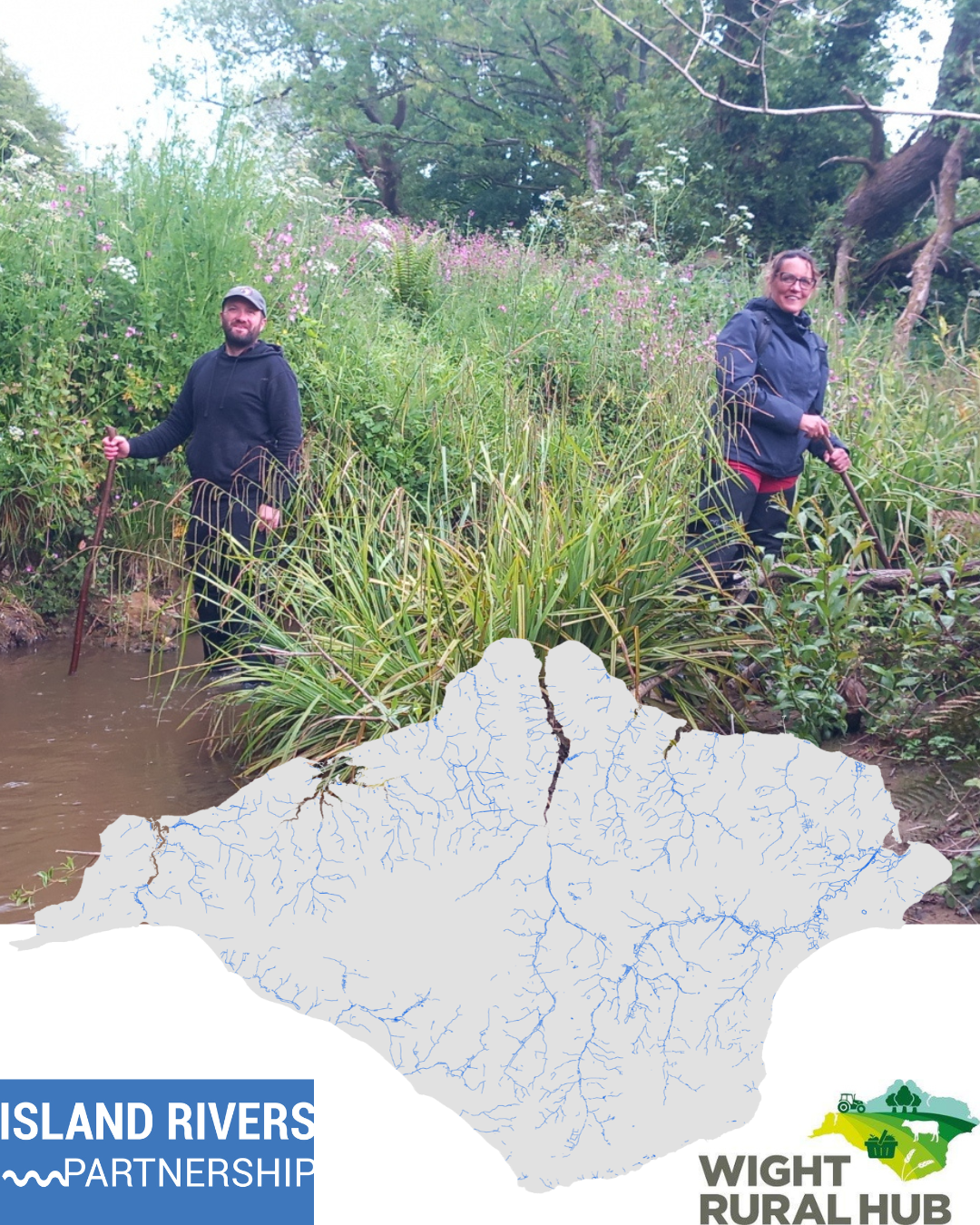
Practical funding is now available for Isle of Wight farmers, landowners and land managers through the Island Rivers Catchment Project Fund, which is designed to help turn local ideas into practical action. Whether you’re looking to improve soil and water management, reduce runoff, restore habitats or develop a collaborative catchment project, the fund can support both early-stage planning and delivery. The Island Rivers team is also sharing an update on this summer’s Himalayan balsam control work and how local volunteers are helping protect our rivers and streams.
Funding support for farmers, landowners and land managers
Island Rivers Catchment Project Fund open for new and existing project ideas
Farmers, landowners and land managers across the Isle of Wight are being encouraged to apply to the Island Rivers Catchment Project Fund for support to progress new or existing projects that benefit farm businesses, watercourses and the wider catchment.
Launched by the Island Rivers Partnership, hosted by Natural Enterprise and funded by Southern Water, the fund is designed to help turn practical ideas into action. It can support projects at an early stage, including initial scoping work, feasibility checks, advice and partnership development, helping farmers and land managers kick start ideas that may otherwise be difficult to move forward.
Funding may be used to explore and deliver measures that reduce sediment entering rivers and streams, slow or retain water running off farmland, improve soil and water management, water quality monitoring, restore riverside habitats, and build resilience to heavier rainfall, drought and other pressures affecting both farming and the natural environment.
Examples could include sediment traps, swales, buffer strips, wetland creation, leaky barriers, improved riparian margins, natural flood management, water retention features or equipment, or collaborative work between neighbouring holdings or across river catchments where action across the landscape could deliver greater benefits.
The farming industry is already working with increasingly unpredictable weather, rising input costs and pressure on land, water and soils. With the Isle of Wight and Hampshire officially in drought, and more frequent periods of too much or too little water, this fund offers a practical opportunity to develop locally led solutions that work for both farm businesses and river health.
Applicants do not need to have a fully formed project before getting in touch. Early conversations are welcomed, particularly where a farmer, landowner or land manager has identified an issue on the ground but needs support to scope options, bring partners together, understand costs, or shape an application. The programme can help strengthen both small, medium and larger-scale ideas, whether they are brand new or build on work already underway.
The fund opened on 1 June 2026, with £50,000 available until March 2027, or sooner if the funding is fully allocated. Further funding rounds are expected. To discuss a potential project, check whether an idea may be eligible, or find out more, email marianne.combe@naturalenterprise.co.uk or call 01983 224926.
Access application form and view the full criteria
Invasive Species (INNS) Volunteer Update
This summer, our volunteers have been making a huge effort in the hot weather to continue tackling Himalayan balsam along watercourses across the upper Eastern Yar.
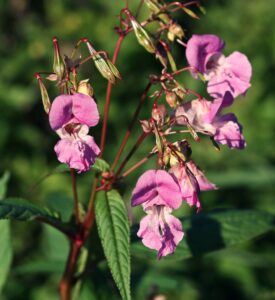
Himalayan balsam is a tall, fast-growing invasive annual plant, often found on riverbanks and damp ground. It can grow to around two to three metres high, with hollow reddish stems, serrated leaves and distinctive pink or purple, helmet-shaped flowers from summer into autumn.
Although attractive, it spreads rapidly by exploding seed pods, outcompetes native plants and can leave riverbanks bare and vulnerable to erosion.
It has been encouraging to see plant numbers reduced at a range of sites where balsam has been repeatedly pulled, bashed and seed heads collected over the past three summers. Local information on new sightings, continued monitoring and surveys from spring into summer are vital if we are to keep bringing it under control.
Please keep an eye out and report any new sightings. If you would like to join a volunteer session and learn more, email seb.taylor@natuaralenterprise.co.uk.
Picture of Island Rivers Team during a Brookes Farm Ecology water vole survey.
Disclaimer: This article has been provided by an external contributor and reflects their understanding at the time of writing. As government policy, grants and scheme guidance may change, readers should verify current requirements and seek independent professional advice where appropriate. Wight Rural Hub accepts no liability for actions taken in reliance on this content.